)
Card-Linked Offers in Affiliate Marketing: From Hype to Hard Numbers
Card-linked offers (CLO) are everywhere right now.
Banks, wallets, and reward apps promise highly engaged audiences, cookie-free tracking, and incremental revenue at the moment of purchase. For affiliate managers and performance leaders under pressure to prove growth, CLO sounds like the answer.
And yet, behind the scenes, many brands are quietly struggling to make it work.
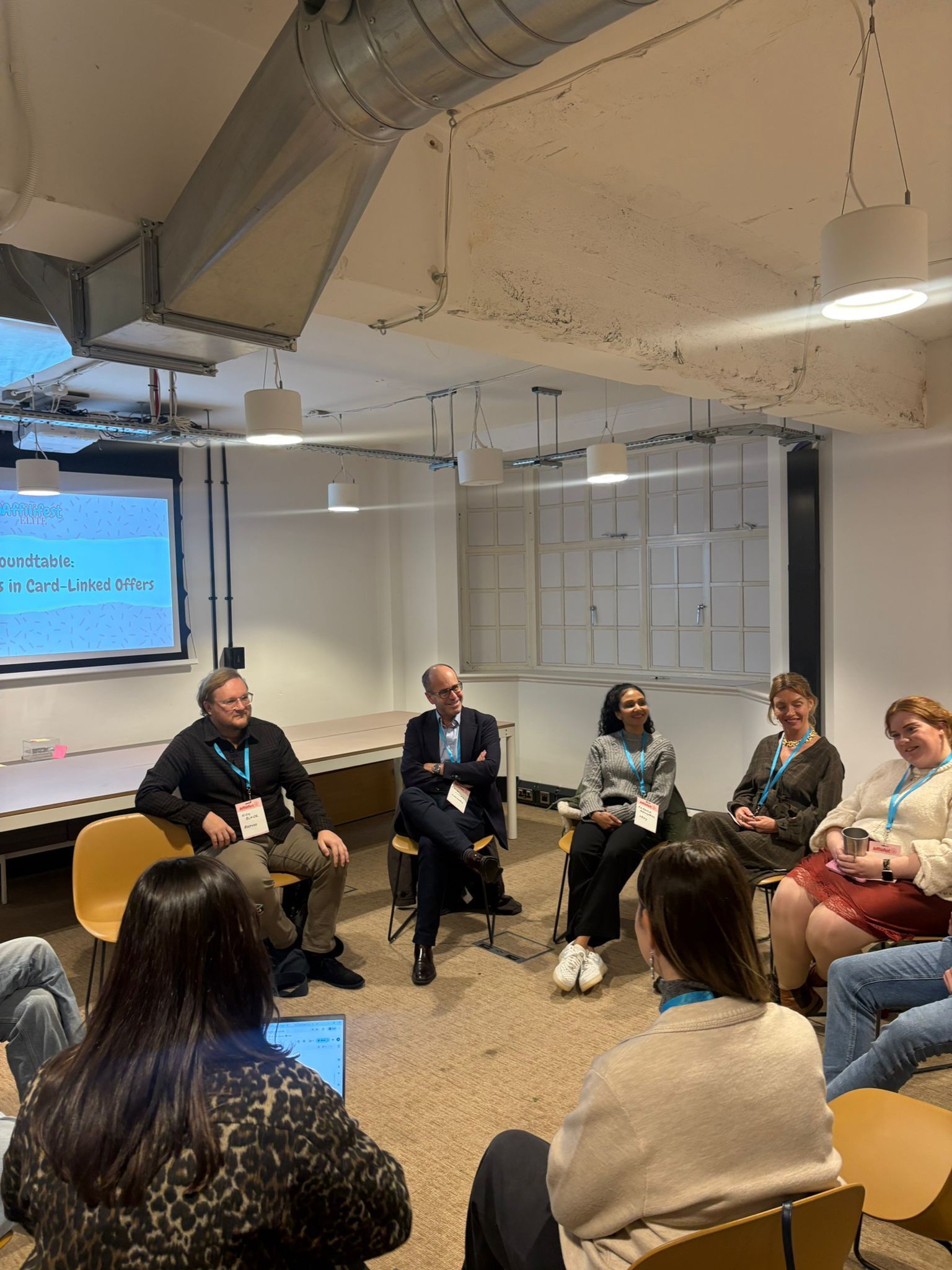
At a recent Affilifest Elite roundtable, senior leaders from Viator, Swarovski, Loqbox, Boohoo, Merlin Entertainments, Ocado, Superdrug, eBay, Dnata, and QVC compared notes on what’s actually happening when card-linked offers move from pitch deck to live activity. The result was refreshingly honest and, at times, uncomfortable.
This article highlights the key themes from that discussion. The full detail, frameworks, and practical guidance are available in the downloadable report:
Why Card-Linked Offers Are So Attractive Right Now
For affiliate and partnership teams, CLO sits at the intersection of several major ecommerce affiliate trends:
-
Growing pressure to demonstrate incremental value, not just last-click wins
-
Declining reliance on cookies and traditional tracking
-
Increasing focus on publisher-brand relationships that go beyond standard cashback
-
Demand for more measurable, defensible performance partnerships
In theory, CLO delivers all of this. Bank and wallet apps are opened daily. Offers appear at the point of spend. Attribution is tied to real transactions rather than pixels.
But theory and reality are not the same thing.
The Real Problems Brands Are Facing With CLOAcross categories, the same structural issues kept coming up in the room.
1. Attribution That Breaks TrustCLO often sits outside GA, affiliate networks, and core reporting. One brand described how growing CLO spend made their affiliate programme look worse on paper, even though total performance improved. In early tests, some brands saw transaction match rates as low as 5 to 15 percent, creating immediate scepticism internally.
When performance can’t be clearly explained, investment stalls.
2. Margin Blind Commercial ModelsSeveral brands shared a blunt reality. With category margins around 7 percent, CLO fee structures of 4 to 5 percent plus customer rewards simply don’t work. Yet many partner proposals still assume brands can absorb these costs without challenge.
Without margin-aware negotiation, CLO quickly becomes unscalable.
3. Compliance and Basket BlindnessFor retail, health, beauty, and grocery brands, compliance is not optional. Prescription products, infant formula, and restricted ranges cannot be incentivised. Many CLO partners only see total basket value, not line-item data, making enforcement difficult and risky.
This is a major blocker for retail affiliate insights teams trying to protect both brand and profit.
4. Double Dipping and Channel OverlapIn travel and retail tests, brands reported overlap of up to 60 percent between CLO and existing affiliate audiences. Without click-to-activate mechanics or clean data, CLO can quietly reward customers who would have converted anyway.
Incrementality becomes an assumption rather than a fact.
Why CLO Fails When Treated as “Just Another Affiliate Partner”One of the strongest conclusions from the Affilifest Elite discussion was this:
Card-linked offers only work when treated as a distinct channel, not as an add-on to the affiliate programme.
When CLO is funded from the affiliate budget but invisible in affiliate reporting, it creates internal tension. When success is judged on last click instead of incremental value, CLO underperforms by definition.
The brands seeing progress were the ones reframing CLO as part of a broader affiliate marketing strategy, with its own role, governance, and success metrics.
What the Strongest CLO Programmes Do DifferentlyRather than sharing tactical hacks, the roundtable surfaced a clear strategic pattern. Successful brands:
-
Define the role of CLO upfront: acquisition, reactivation, share of wallet, or omnichannel uplift
-
Invest in data and tracking before scaling, not after
-
Build commercial models that work at real margins, not hypothetical ones
-
Put compliance, governance, and returns handling at the centre
-
Treat CLO partners as collaborators, not black boxes
These principles apply across ecommerce, travel, retail, and marketplaces, regardless of size or maturity.
The report breaks these down in detail, with examples from brands actively testing, pausing, renegotiating, and relaunching CLO programmes.
Download the Full Affilifest Elite CLO ReportThis article only scratches the surface.
The full report includes:
-
Real examples of match rates, overlap, and incrementality
-
A practical framework for making CLO commercially viable
-
Guidance on data requirements, compliance, and governance
-
Questions to ask CLO partners before you sign
-
A clear checklist for auditing your current CLO footprint
It’s based on a closed-door Affilifest Elite roundtable, under Chatham House rules, with brands openly sharing what they wouldn’t say on stage.
👉 Download the full report: “How Brands Can Make Card-Linked Offers Work: From Hype to Hard Numbers”
If CLO is on your 2026 roadmap, this is essential reading.
)
)
)
)
)
)
)

)
)
)
)
)
)
)
)
)
)
)
)
)
)
)
)
)
)
)
)
)
)
)
)
)
)
)
)
)
)
)
)
)