)
AI, Affiliate Marketing, and the Fight for Discovery in 2026
AI is already reshaping how consumers discover products. What’s far less clear is what that means for affiliate marketing, publisher economics, and partner value over the next 18 to 24 months.
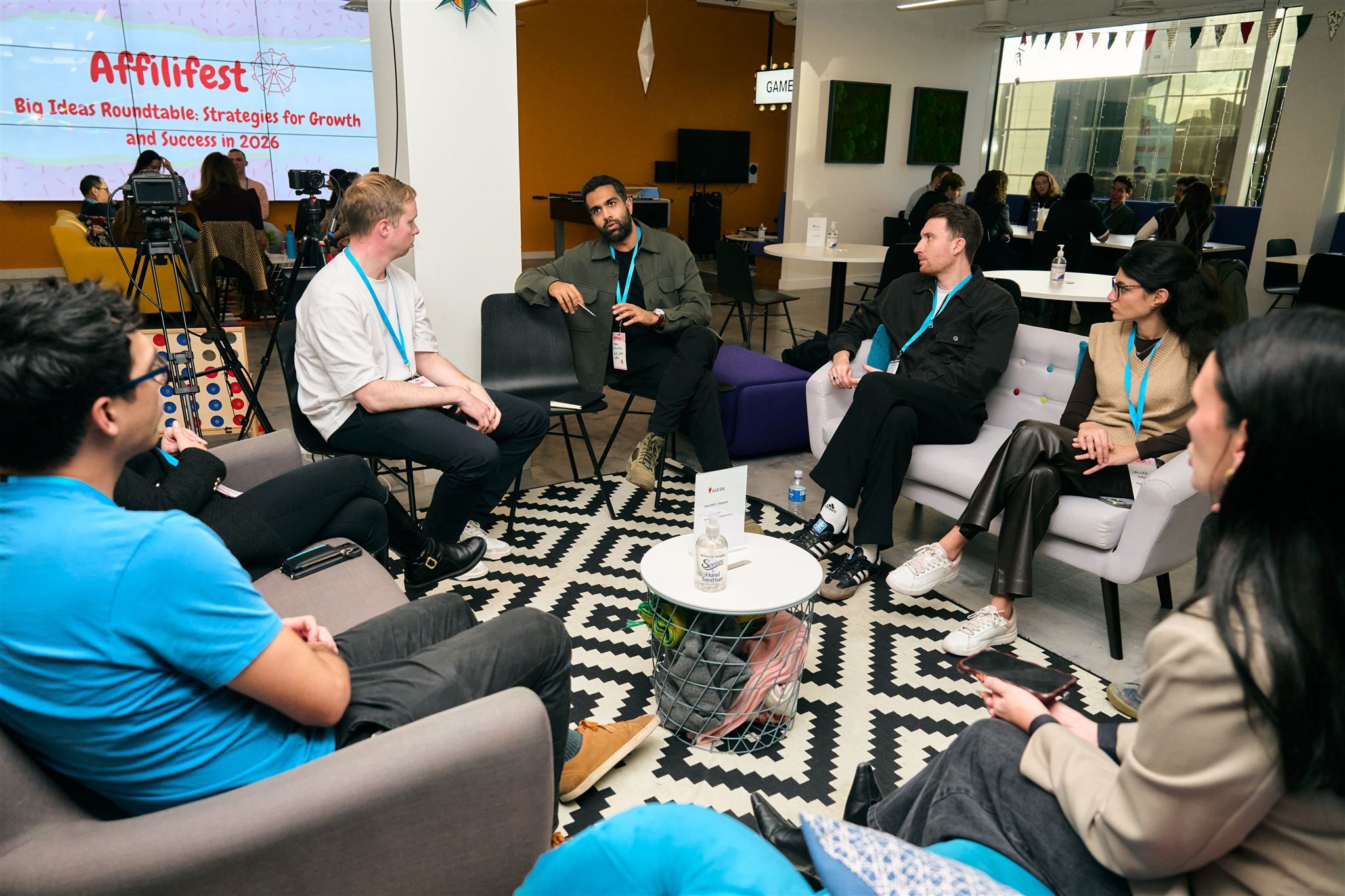
At Affilifest’s Big Ideas Roundtable, we ran three back-to-back, closed-door discussions with brands, publishers, networks, and agencies to pressure-test one question:
Does AI fundamentally break the affiliate model, or does it force the channel to grow up?
The answer was not neat. There was real disagreement in the room. Some participants were optimistic. Others were bluntly sceptical. What everyone agreed on is this: doing nothing is no longer an option.
This article pulls together the most useful insights, arguments, and hard-earned lessons from those discussions, with clear takeaways for affiliate managers, publishers, and partnership leaders planning for 2026.
The Core Tension: AI Is Changing Discovery Faster Than Attribution Can Keep Up
One of the clearest themes across all three roundtables was the growing disconnect between where influence happens and where affiliate tracking still works.
AI-driven discovery is already:
-
Absorbing top-of-funnel searches into AI summaries
-
Reducing click-throughs from traditional SERPs
-
Creating “zero-click” journeys where influence exists but attribution disappears
Several publishers shared that offer-based and discount-code searches are down materially, while AI summaries increasingly surface codes directly, often scraped, expired, or incorrect. The result is worse consumer experience and collapsing traffic for large parts of the voucher ecosystem.
At the same time, directional and descriptive content (reviews, buying guides, explainers, YouTube, social-first formats) is becoming more influential inside large language models.
Key tension:
Affiliate marketing still largely pays for clicks and last-touch outcomes, while AI is reshaping consideration.
This was the most heated disagreement in the room.
The pessimistic view:
Some participants argued that:
-
AI agents will increasingly recommend and transact directly
-
Comparison and aggregation models are structurally vulnerable
-
Large language models will not meaningfully support affiliate economics long term
-
AI platforms will become walled gardens, just like Google, Meta, and TikTok
From this perspective, entire categories of affiliates are at risk, especially those built almost entirely on intercepting Google search demand.
The counter-argument:
Others pushed back hard:
-
AI models still rely on high-quality human content
-
Trust, credibility, and cultural context remain weak points for AI
-
Conversion rates from LLMs are currently low
-
Consumers still want validation before purchase, especially for higher-consideration items
Several publishers shared that brands are increasing spend with partners that have real audiences, diversified distribution, and clear editorial authority.
The consensus:
AI won’t kill affiliates wholesale. It will accelerate the decline of undifferentiated models and reward publishers that offer genuine influence, trust, and audience access.
AI Is Not Just a Threat. It’s Exposing Weak Partner Value
A recurring theme was uncomfortable but important: “If AI is replacing you, you probably weren’t adding enough value to begin with." Affiliate managers admitted that parts of the channel have relied too heavily on:
-
Mechanical SEO tactics
-
Thin content built purely for monetisation
-
Poor consumer experience hidden behind attribution rules
AI is forcing brands to ask harder questions about who actually influences customers, not just who captures the click.
For partnership leaders, this creates both risk and opportunity:
-
Risk if budgets stay tied to outdated measurement
-
Opportunity if partner value can be reframed around incrementality, insight, and influence
Where AI Is Delivering Real Value Today (Operationally)
While there was scepticism about AI in discovery, there was near-universal agreement on its operational impact.
Across brands, publishers, and networks, AI is already:
-
Cutting paid media setup time by 30 to 50 percent
-
Reducing manual validation and customer service workload
-
Improving internal reporting, forecasting, and deal modelling
-
Speeding up partner prep, legal review, and account planning
One participant summed it up well:
“AI hasn’t replaced people. It’s given people time back to be more human.”
This matters for affiliate program growth. Operational efficiency is becoming a competitive advantage, especially as teams are asked to do more with fewer resources.
Sustainability, Trust, and the Human Counter-Culture
An unexpected but important thread was the ethical and environmental cost of AI.
Several attendees shared:
-
Internal resistance to AI adoption on sustainability grounds
-
Concerns about energy usage and data waste
-
A growing counter-culture among younger users who actively avoid AI tools
This fed into a broader insight:
Human trust still matters. A lot.
For high-consideration purchases (travel, finance, big-ticket retail), participants agreed that:
-
AI recommendations are not yet trusted enough on their own
-
Social proof, community, and human validation remain critical
-
Influencers, creators, and trusted publishers still play a decisive role
This reinforces the importance of publisher-brand relationships built on credibility, not just reach.
What Happens to Affiliate Measurement in an AI-First World?
No one pretended this was solved.
Key challenges raised:
-
Zero-click journeys break last-click attribution
-
AI citations do not map neatly to transactions
-
Influence is increasingly upstream and invisible
But there were early experiments discussed:
-
Tracking AI citations across LLMs
-
Modelling prompt visibility over time
-
Combining brand uplift studies with affiliate data
-
Using “How did you hear about us?” more seriously again
The uncomfortable truth is that affiliate marketing may need to accept less deterministic measurement if it wants to stay relevant in AI-driven discovery.
Practical Tactics You Can Use TomorrowFrom the roundtables, several immediate, practical actions emerged.
For affiliate managers-
Audit which partners genuinely influence consideration, not just conversion
-
Test paying for visibility, content, or insight where attribution is weak but influence is real
-
Invest in partners that own audiences, not just search positions
-
Pressure-test incrementality assumptions, especially around discount traffic
-
Diversify distribution aggressively beyond Google
-
Build recognisable editorial authority in specific niches
-
Create content designed to be referenced, not just clicked
-
Explore new commercial models tied to influence, not just CPA
-
Help clients understand where AI is already affecting discovery
-
Improve operational tooling before chasing shiny AI features
-
Focus on reducing friction, time, and manual work across the ecosystem
What This Means for Affiliate Marketing Strategy in 2026
AI is not a single moment. It’s a structural shift. The roundtables made one thing clear: the affiliate channel’s future depends less on AI itself and more on how honestly the industry confronts its own weaknesses.
Affiliate marketing that is:
-
Transparent
-
Trust-led
-
Partner-centric
-
Operationally efficient
…has a strong future.
Affiliate marketing that relies on:
-
Opaque attribution
-
Thin value exchange
-
Intercepting demand without adding insight
…does not.
Join the Conversation at Affilifest 2026
AI, discovery, and partner value will be central themes at Affilifest 2026.
If you’re:
-
Testing how AI reshapes discovery
-
Rethinking affiliate program growth
-
Building real publisher-brand relationships
-
Learning hard lessons the messy way
We want those conversations on stage.
👉 Register for Affilifest 2026
👉 Pitch a session on AI reshaping discovery or partner value, especially if you bring:
-
Real examples
-
Clear takeaways
-
Honest disagreement
-
Tactics people can use the next day
)
)
)
)
)
)
)

)
)
)
)
)
)
)
)
)
)
)
)
)
)
)
)
)
)
)
)
)
)
)
)
)
)
)
)
)
)
)
)
)